Water Softener
Consider when the primary concern is:
- Water hardness
- Scale
- Mineral residue
- Soap performance
Water filters and water softeners are often discussed as if they do the same job, but they address different water concerns. Understanding the difference can help you choose a treatment approach based on your home's actual water conditions and your goals.
A traditional water softener primarily addresses water hardness by reducing calcium and magnesium.
A water filtration system is designed to address particular substances or water-quality characteristics depending on the filtration technology being used.
They are not interchangeable. In some situations, a homeowner may benefit from filtration. In others, softening may be the primary concern. Some treatment systems can also combine filtration and softening.
The right approach depends on what is actually in your water and what you want to improve.
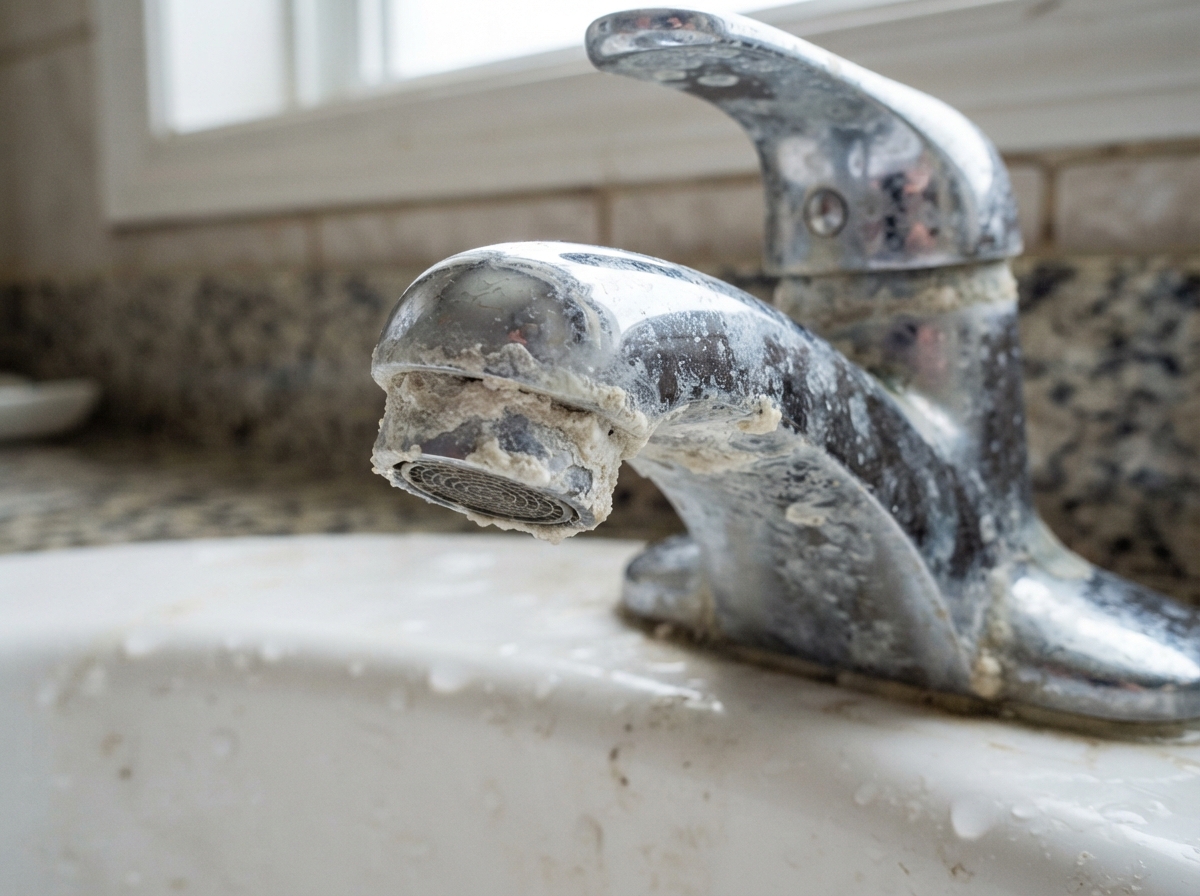
Water hardness is primarily associated with dissolved calcium and magnesium. Hard water is generally considered a nuisance rather than a health concern.
Common signs that may be associated with hard water include:

Important: These visible signs alone do not diagnose a home's water. Hard water is different from a drinking-water contamination problem.
A traditional water softener passes water through a resin media that exchanges hardness minerals such as calcium and magnesium for sodium or potassium ions. Its primary purpose is to reduce hardness.
Contains calcium & magnesium
Resin exchanges ions
Calcium & magnesium reduced
Reduced hardness output
"Water filtration" is a broad category. Different filtration technologies are designed for different purposes.
Filtration performance depends on filtration technology, filter media, system configuration, water conditions, and what the system is specifically designed and certified to reduce.
Often used for certain taste, odor, chlorine, and other specific filtration objectives depending on the system.
Designed to capture suspended particles of particular sizes.
Uses a membrane-based treatment process and is commonly used for drinking and cooking water at a specific point of use.
Some water conditions may require treatment designed specifically for the substance or issue being addressed.
Important: A filter should be selected based on the treatment objective and verified performance of the specific system. A filter does not automatically remove every possible substance.
Softening and filtration solve different problems.
Yes. Some residential treatment systems combine multiple treatment stages so the system can address hardness while also providing additional filtration.
A combination system may incorporate traditional water softening, filtration media, sediment filtration, or other treatment stages depending on system design.
The exact capabilities depend on the treatment media, system design, and certified performance of the specific equipment.
Homeowners may encounter terms such as no-salt filtration, water conditioning, or scale-reduction systems. These systems should not automatically be called "water softeners."
Traditional ion-exchange softening physically reduces hardness ions such as calcium and magnesium. A no-salt conditioning or scale-reduction system may be designed to address scale formation or provide filtration, depending on the technology, but it does not necessarily remove hardness minerals in the same way as a traditional softener.
For accuracy, terms such as no-salt filtration system, water conditioner, or scale-reduction system better describe these technologies depending on what is being discussed.
Reverse osmosis, commonly called RO, is a membrane-based filtration technology. Residential RO systems are often installed at a point of use, such as beneath a kitchen sink, to provide treated water for drinking and cooking.
RO serves a different role from a traditional whole-home water softener. An under-sink RO system does not treat every faucet in the home.
Whole-home treatment and drinking-water treatment do not always need to be the same system.

Consider which option aligns with your water conditions and goals.
Consider when the primary concern is:
Some homes may have concerns that require a more targeted treatment approach.
Important: Do not diagnose these issues from smell, color, or appearance alone. Specific water conditions should be identified before selecting treatment equipment.
Water characteristics can vary based on several factors.
Homeowners can review their local utility's Consumer Confidence Report or water-quality information to understand what is in their water.
Water testing may help identify conditions that should be considered before selecting treatment.
Choose treatment based on your actual water conditions—not assumptions about Florida water in general.
These questions can help you become a better-informed buyer.
A water-treatment system should be evaluated based on what the specific equipment is designed and independently certified to do—not broad claims about what all filters or softeners can remove.
Homeowners may encounter references to recognized standards such as NSF/ANSI standards or other ANSI-accredited third-party certification programs. These can help indicate that a specific system has been tested for particular performance claims.
Always verify the actual certification and performance of the specific equipment being considered.
If your primary concern is hardness, a traditional water softener may be the appropriate type of treatment. If you are trying to address a different water-quality characteristic, a filtration system may be more relevant. Some homes may benefit from a combination system, while others may only need drinking-water treatment at a particular faucet.
The right answer starts with understanding your water and your goals.
Every home and water supply can be different. Alpes Homes Solutions can help you explore water-treatment options based on your household needs and the concerns you want to address.
Call Us
(813) 860-5947
Service Area
Tampa-Based · Serving Multiple Florida Communities
These resources are provided for general educational purposes. Alpes Homes Solutions is not affiliated with any of these organizations. Always verify current information directly with the source.